Theatre
Tartu New Theatre is an open-source programme whose server is located in Tartu. This is the only thing that's certain, everything else is possible
Manifesto
- Tartu New Theatre is an open platvorm for new ideas.
- Even here not every idea is realised — far from it. But many strong ideas that don't fit within established, fully institutionalised theatre can become an integral part of Tartu New Theatre.
- If there is no idea, no joy, no enthusiasm, there is no Tartu New Theatre. No one can be forced to make theatre, and no one can be forced to watch it.
- Tartu New Theatre is founded on the possibility that theatre can exist on free will, rather than tradition, profession, or obligation. Just as we wouldn't want to force our audience, we couldn't force anyone on the stage. It may therefore happen that Tartu New Theatre disappears quickly, with the desire. Yet this is the only way to persist, and — further more — outlive any institutionally secured organisation, regardless of cultural, political or personal crosswinds.
- With each production, we aim to question and, if necessary, redefine the “theatre” in our name. Only then can the “new” in it remain honest.
- Tartu New Theatre is an open-source programme whose server is located in Tartu. This is the only thing that's certain, everything else is possible.
- Even Tartu New Theatre has once been, in the 19th century. There has always been someone who wanted to do things differently. And there will likely be more, if Tartu itself remains. There have also been many newer Tartu theatres, and there will be more. Each time, this drive and turbulence ends in entropy, drowning, decline, or drifting into the mainstream. But what can one do, if the heart demands and circumstances allow?
- The struggle must continue, even when the meaning of that struggle has changed.
For Organisers
We mostly use our venues for our own work, but whenever possible, we also host other events. Don't hesitate to get in touch, the sooner the better.
We have up-to-date, professional sound, lighting, and video equipment, as well as platforms for building a concert stage. A video screen can be rented on favourable terms through our partners.
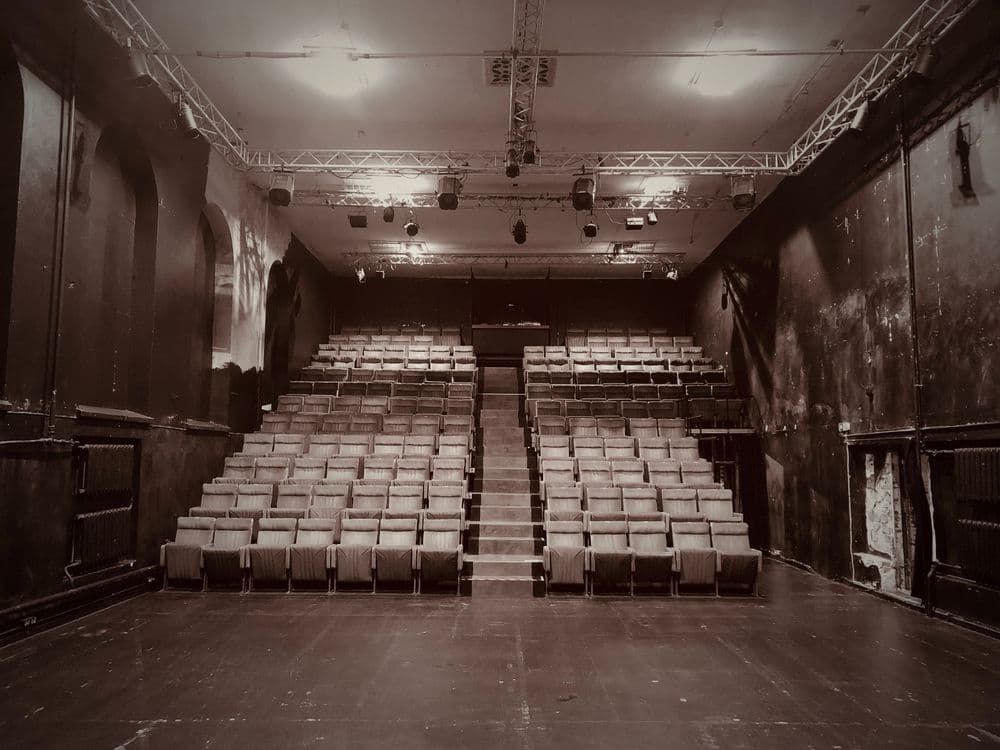
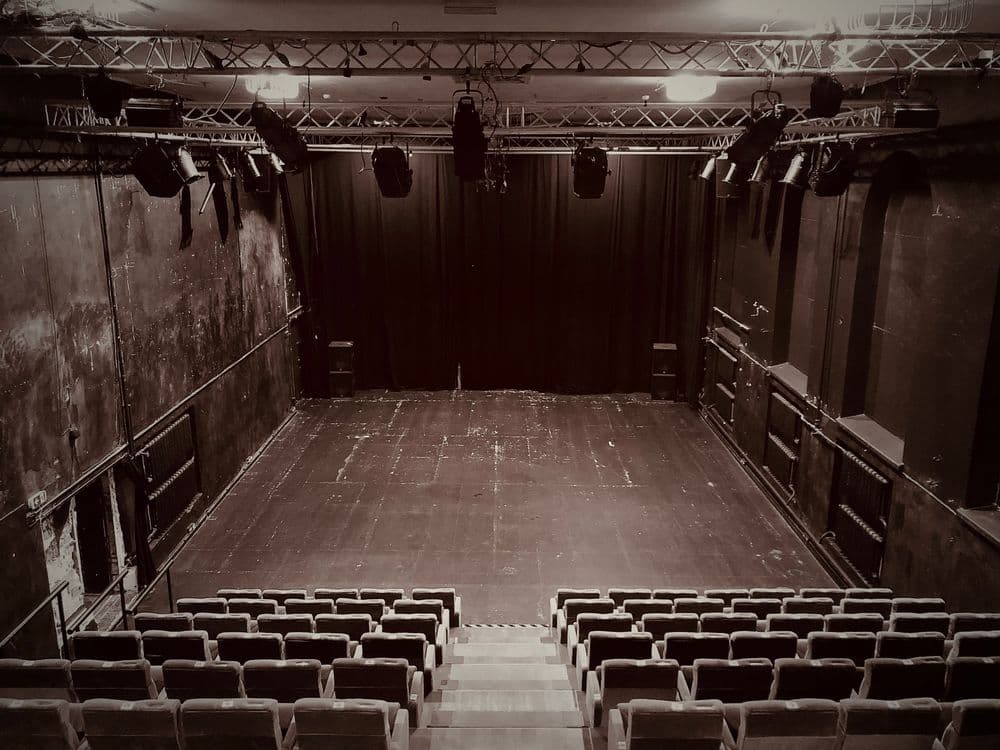
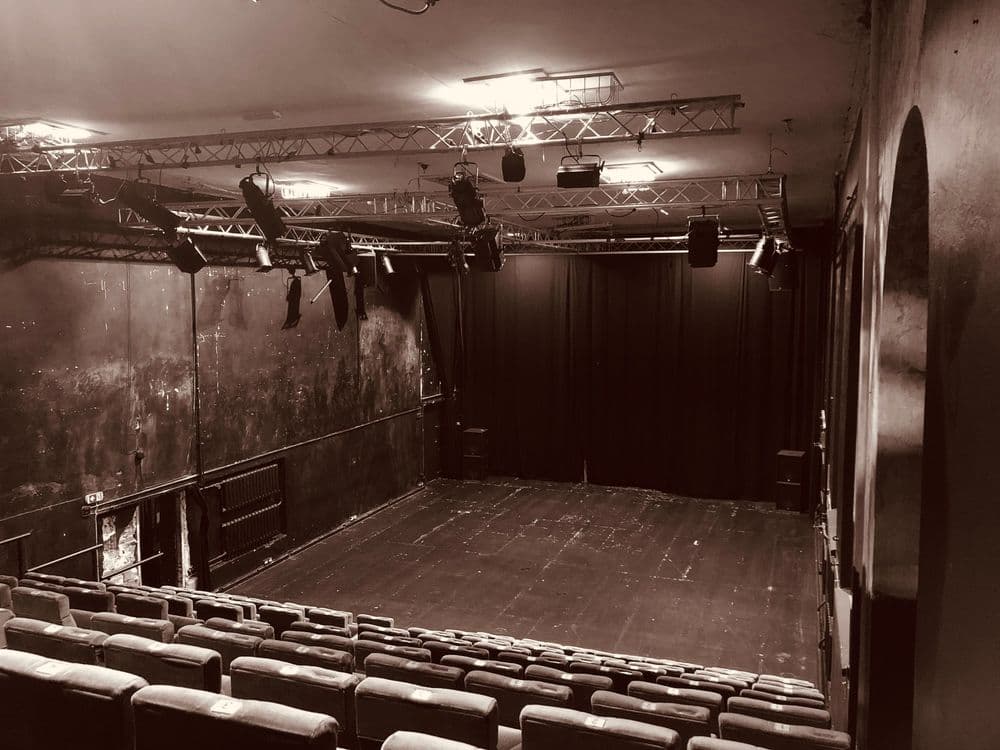
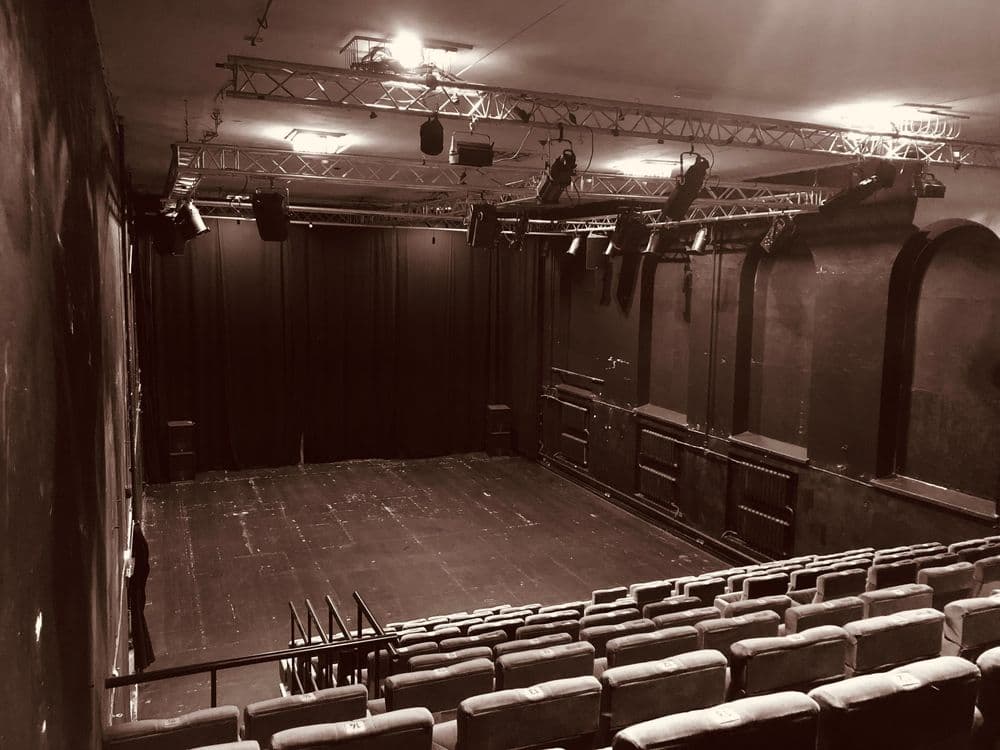
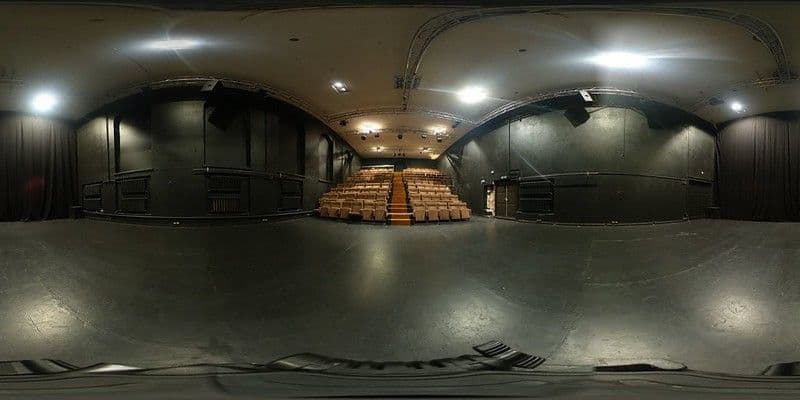
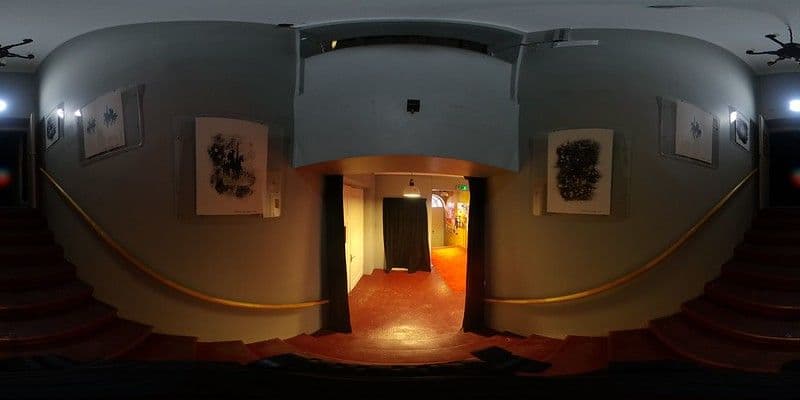
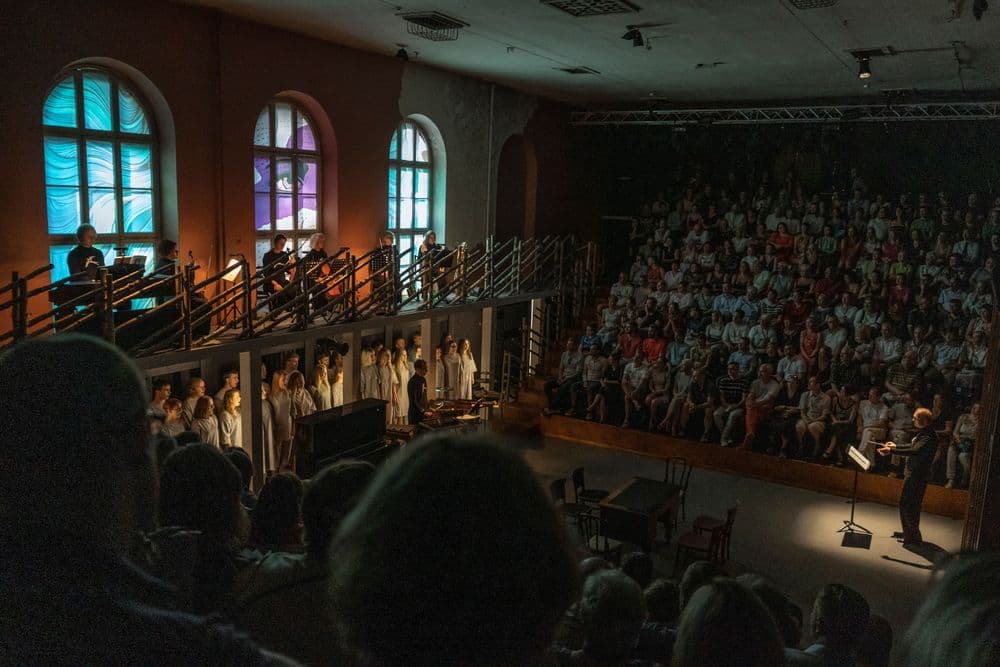
The Large Hall has 153 seats on raised platforms.
With additional seating, the capacity is 200–250 (depending on whether there is a stage and where it is positioned). Part of the seating platvorms can be removed; in a standing setup, the hall can accommodate up to 400 people.
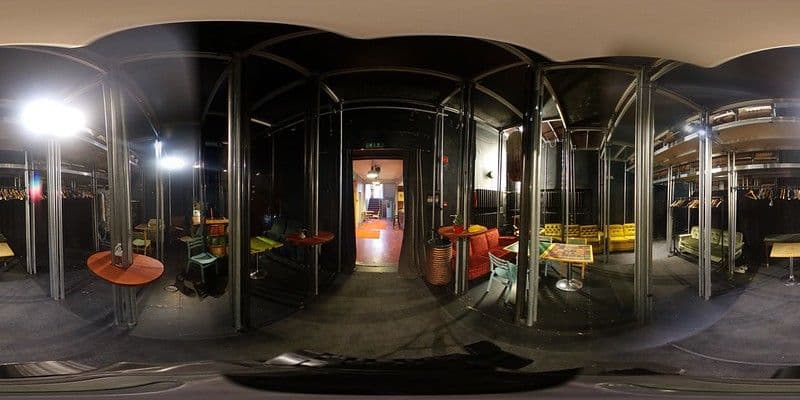
The Small Hall has 60 seats on raised platforms.
However, the platforms can be entirely removed and the space can be reconfigured in various ways. But the overall capacity is more or less the same.
Check availability
bronn@uusteater.ee
Stage & Technical questions
Rene Liivamägi
rene@uusteater.ee
5347 9995
Tickets and Admin questions
Lisanna Annus
lisanna@uusteater.ee
5300 7522
Theatre History
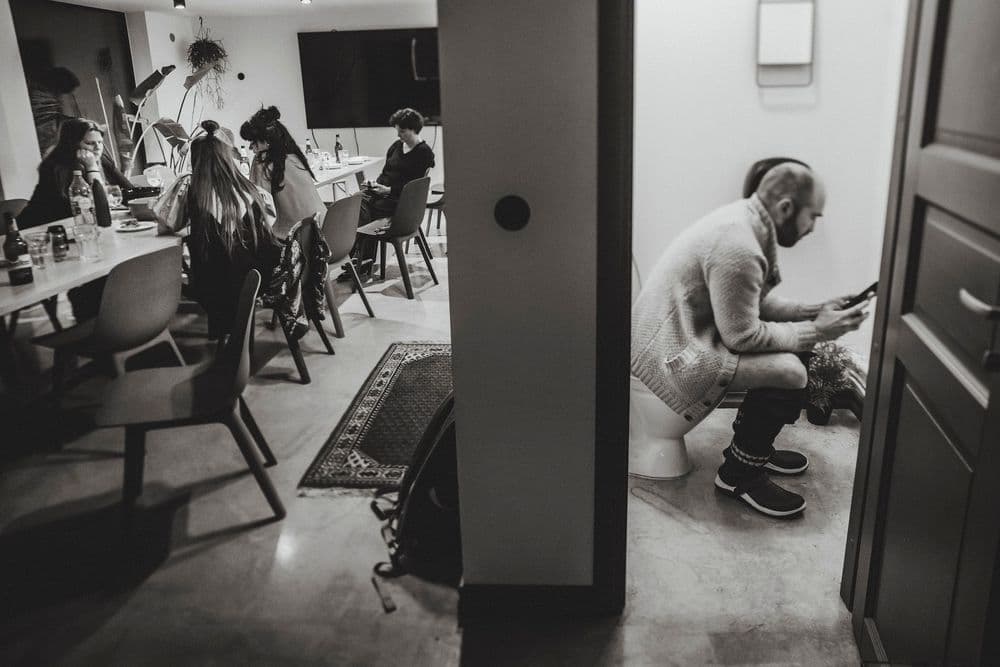
We founded Tartu New Theatre in 2008 as a kind of theatrical branch of the Genialistide Klubi. The first production can therefore be considered Ott Aardam’s Port Authority, which premiered at the Genialistide Klubi in the Lutsu Theatre House — although the name “New Theatre” did not appear on the posters until the following project.
The theatre grew out of a wish to realise ideas we would like to see, but which did not fit anywhere else. Our aim is to make theatre that is flexible, searching, research-driven, curious, and grounded in a strong authorial position. Simply good plays can be well made anywhere.
Before settling into our current building, we worked in several temporary locations: first planning a venue in the Pärmivabrik vodka warehouse, then operating at Magasini 5, and from 2011 in the former sports hall at Lai 37. Between 2017 and 2019, a large-scale crowdfunding campaign made it possible for us to become owners of the theatre building.
Alongside our own stages, we have worked in theatres and non-theatrical spaces across Estonia and internationally — from city theatres to buses, trains, parks, factories, beaches, abandoned buildings, and urban streets — treating space as an active part of our theatrical language.
But theatre is not a building or a space — theatre is people. People arrive and leave; they are always irreplaceable and yet replaceable, changing together with the theatre or changing the theatre itself. There have been moments of great joy, disappointments, even intrigues, but what matters most is why we do this. And that is a question worth asking again and again.
We have received praise, awards, love, misunderstanding, and even hostility — as befits a committed and searching theatre.
Over the years, what was once a “plastic-bag theatre” has become a solid, independent organisation capable of realising even the most daring ideas, for audiences of 1 or 2,000. So that others would not have to go through the same path, we have opened our house to various theatre projects, both for guest performances and co-productions.
Building History
The theatre stands on the former site of the Church of the Holy Spirit, which dates back to the Middle Ages. The church and hospital stood along the city wall, next to the Russian Gate. They were most likely originally built of wood and later reconstructed in fieldstone and brick. The complex functioned as a hospice for the poor and the infirm of the surrounding area and was governed by the city council. At the same time, the hospital was also used as a means of combating folk medicine.
Over time, the buildings changed both purpose and ownership. In the 16th century, they were transferred to the Franciscan Convent of St Clare. After the Reformation, the site continued to function as a hospital in a transformed form, and following the Livonian War only the church remained. Later, the city executioner lived on the site, and after the Great Northern War the former church was used as a grain store for the city. This function gave its name to the neighbouring Magasini Street.
At the end of the 19th century, the plot was purchased by the Society for the Establishment of Tartu Health Institutions, which demolished the former buildings and constructed a gymnasium in 1889–1890, designed by architect Reinhold Guleke. This building — today’s main structure — has retained its architectural character despite later extensions. During the Second World War, the gymnasium was heavily damaged and later rebuilt with a different roof. After the war, the building belonged to the University of Tartu, and additional structures were added, including a boiler house and a storage building (now part of the Small Hall).
In 2010, following the relocation of the Department of Physical Education, the University decided to sell the building. Tartu New Theatre has been here since 2011. Between 2017 and 2019, a crowdfunding campaign enabled MTÜ Uus Teater to purchase the former gymnasium — now the theatre building — from its previous owner.
Tartu New Theatre is one of the few theatres in Estonia that owns its own building.
You don't have to build a theatre to make theatre
Open Call
When we started with Tartu New Theatre, we had neither a building nor a stage. Over the course of 17 seasons, we have gradually developed a two-stage theatre building, shaped by our own practical needs. So that every group or newly starting theatre wouldn’t have to go through the same long process, we open up our spaces a few times a season for co-productions.
The end-of-2025 open call deadline has passed; we are currently reviewing the proposals and meeting with applicants.
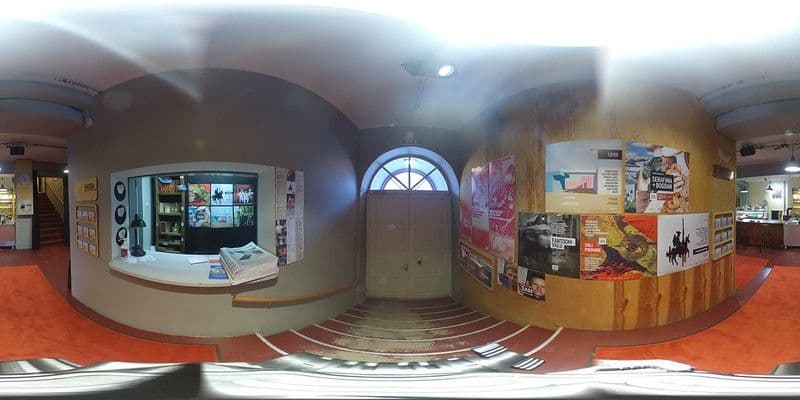
In the past, we have had two open calls for new productions. These have resulted in works such as Serafima+Bogdan, Fantoomvalu, Haige mäger, Anne lahkub Annelinnast, Mann und Licht, and others.